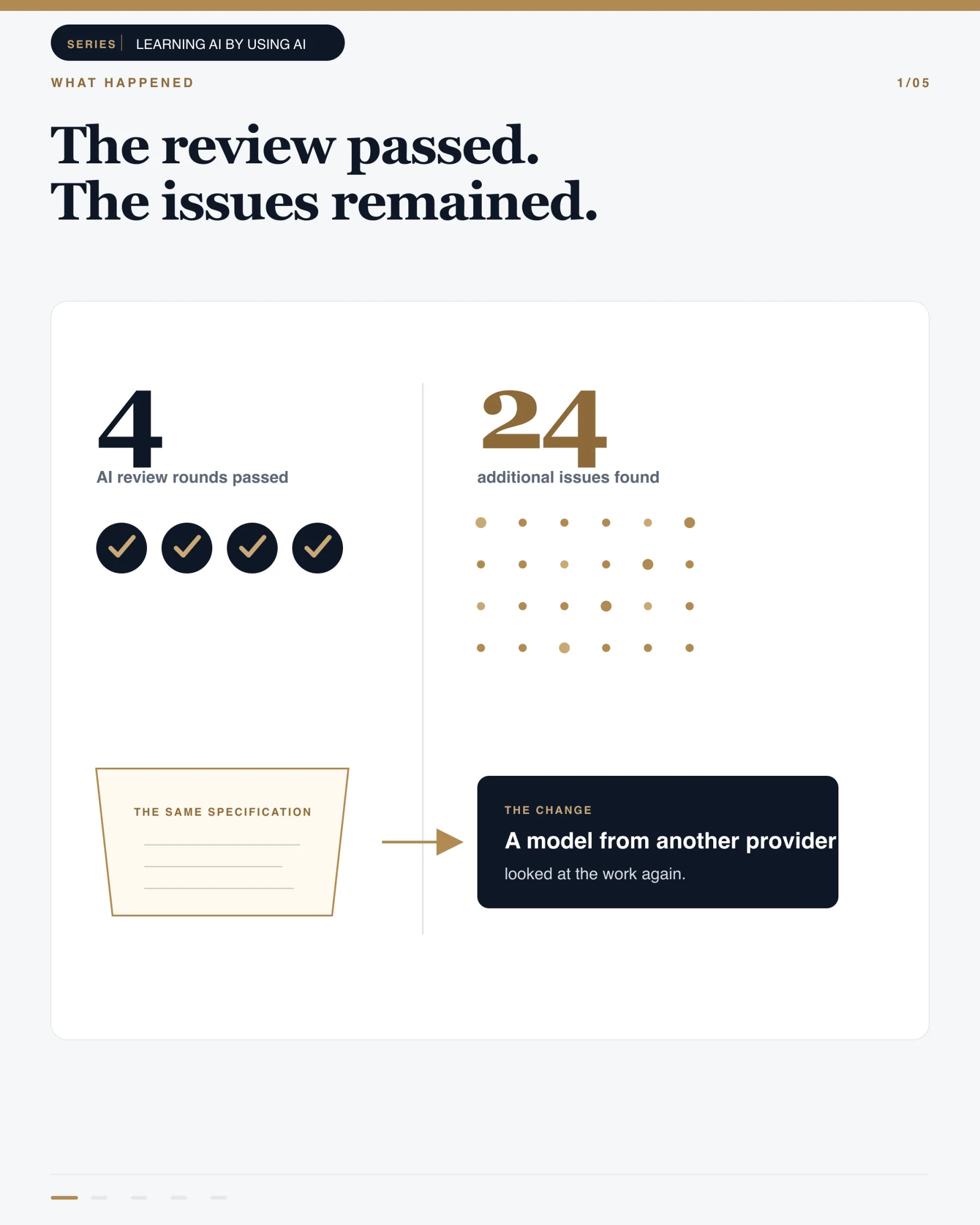
One spec in my personal agentic AI project passed 4 rounds of AI review and was approved for implementation. Then a model from another provider found 24 more issues in it.
That left me with a question I couldn't answer: why had the earlier reviews missed them?
I mentioned this in my first post: recurrent issues had survived one model doing the work and another reviewing it.
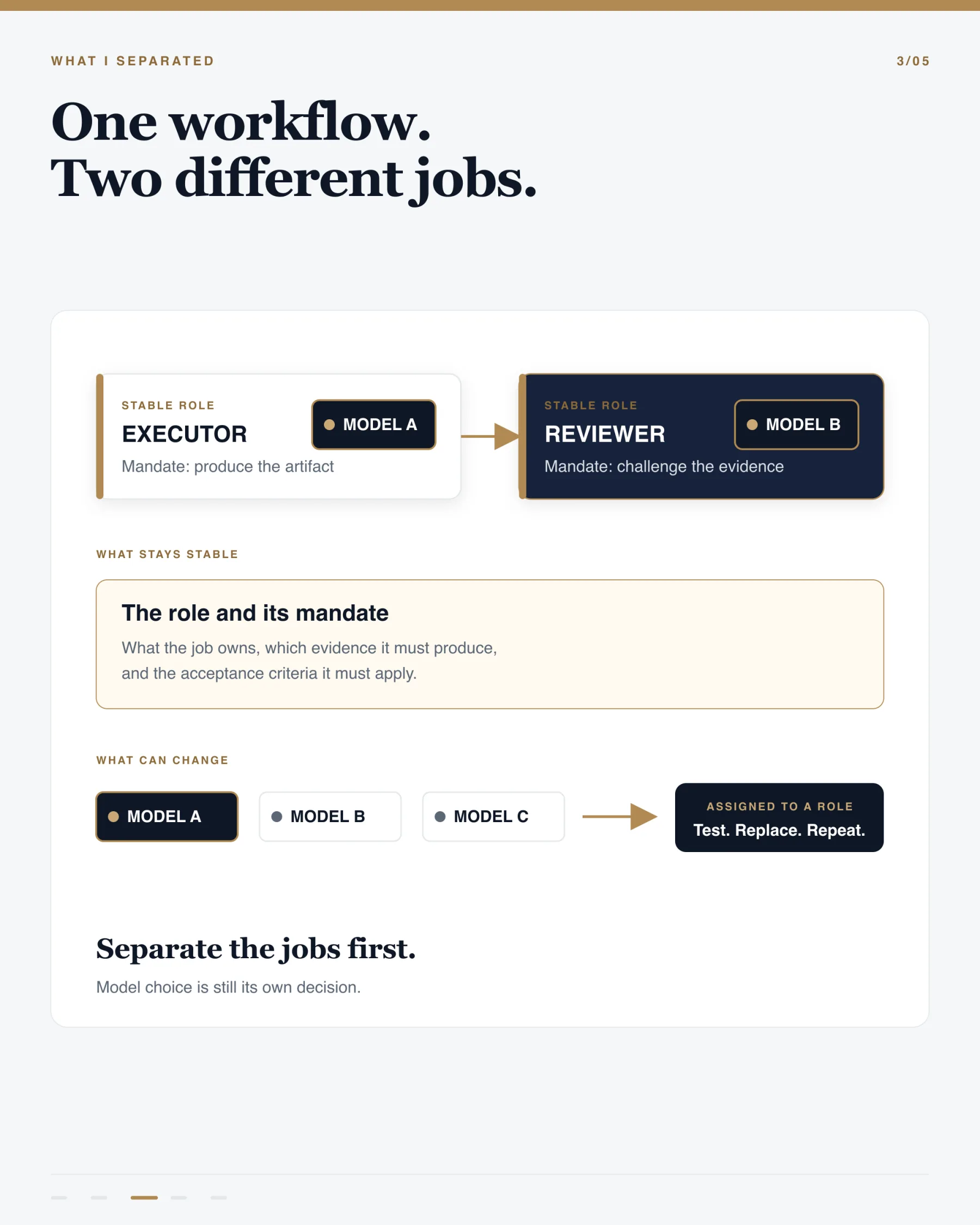
At first I thought splitting the roles was the important change: one agent to execute, another to challenge the result against the evidence.
-
That separated the jobs. Model choice was still its own decision.
-
The same model can do two different jobs when the instructions and acceptance criteria change. A different model may bring different strengths and blind spots.
So I looked for research that might explain part of it.
-
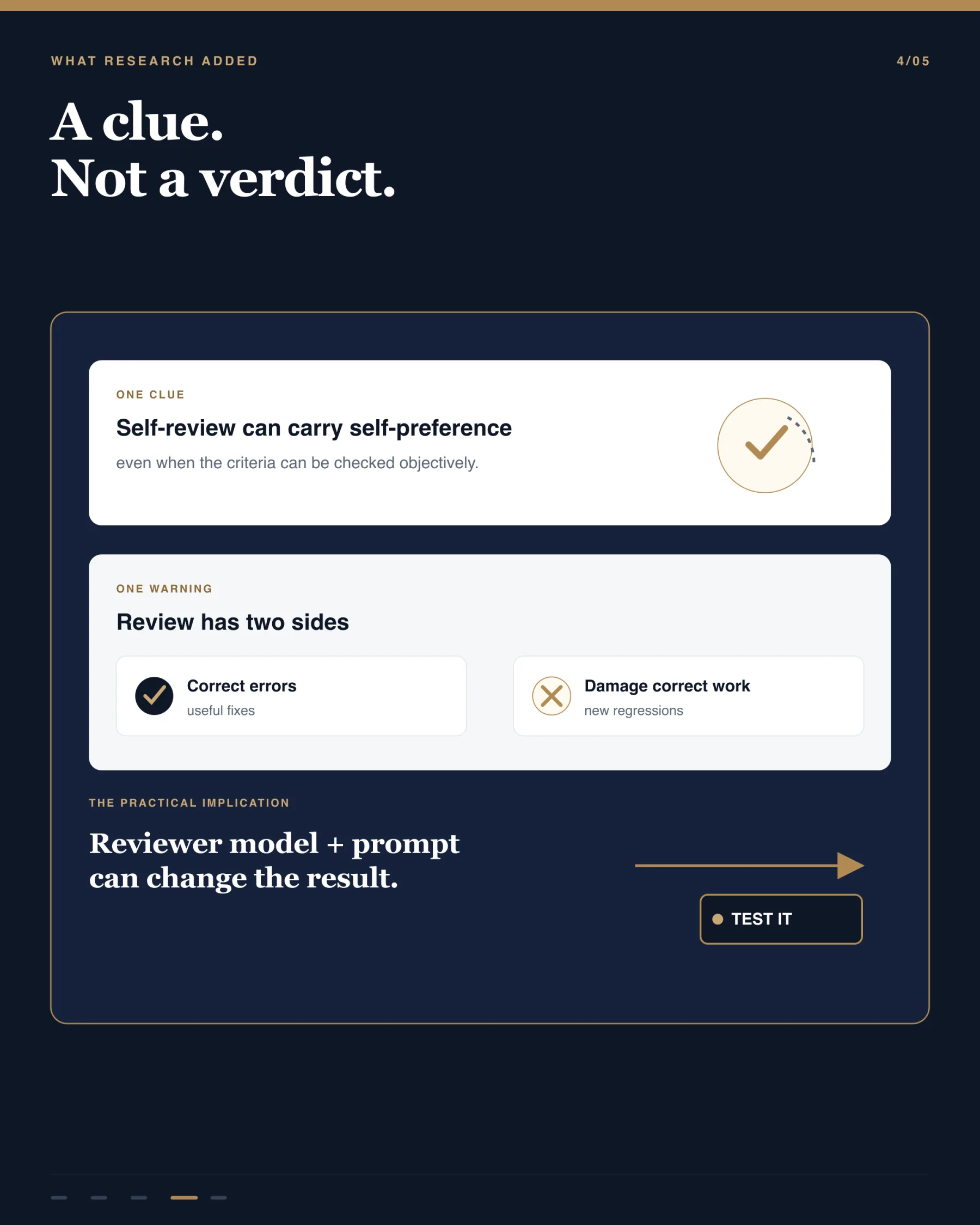
A recent study found self-preference even with verifiable rubrics. Some judges were more than 50% more likely to mark a failed criterion as satisfied when reviewing their own output.
-
An Apple study counted both what review fixed and what it broke. Results changed with the reviewer model and prompt. Its GPT-4o and o3-mini comparison is already dated.
I didn't find a definitive answer. The studies gave me hypotheses. (I left their links in the first comment)
For this project, the multi-provider setup is now part of the foundation. Reviews have been better when the executor and reviewer use models from different providers. That is still my current feeling. I haven't run a controlled comparison yet. But I can change the model behind a role without rebuilding the workflow.
In the day-to-day work on this personal project, I use several coding agents: Claude Code, Codex and Pi, with OpenRouter as a gateway to open-weight models such as DeepSeek, GLM and Kimi. I follow the same pattern by passing work between models.
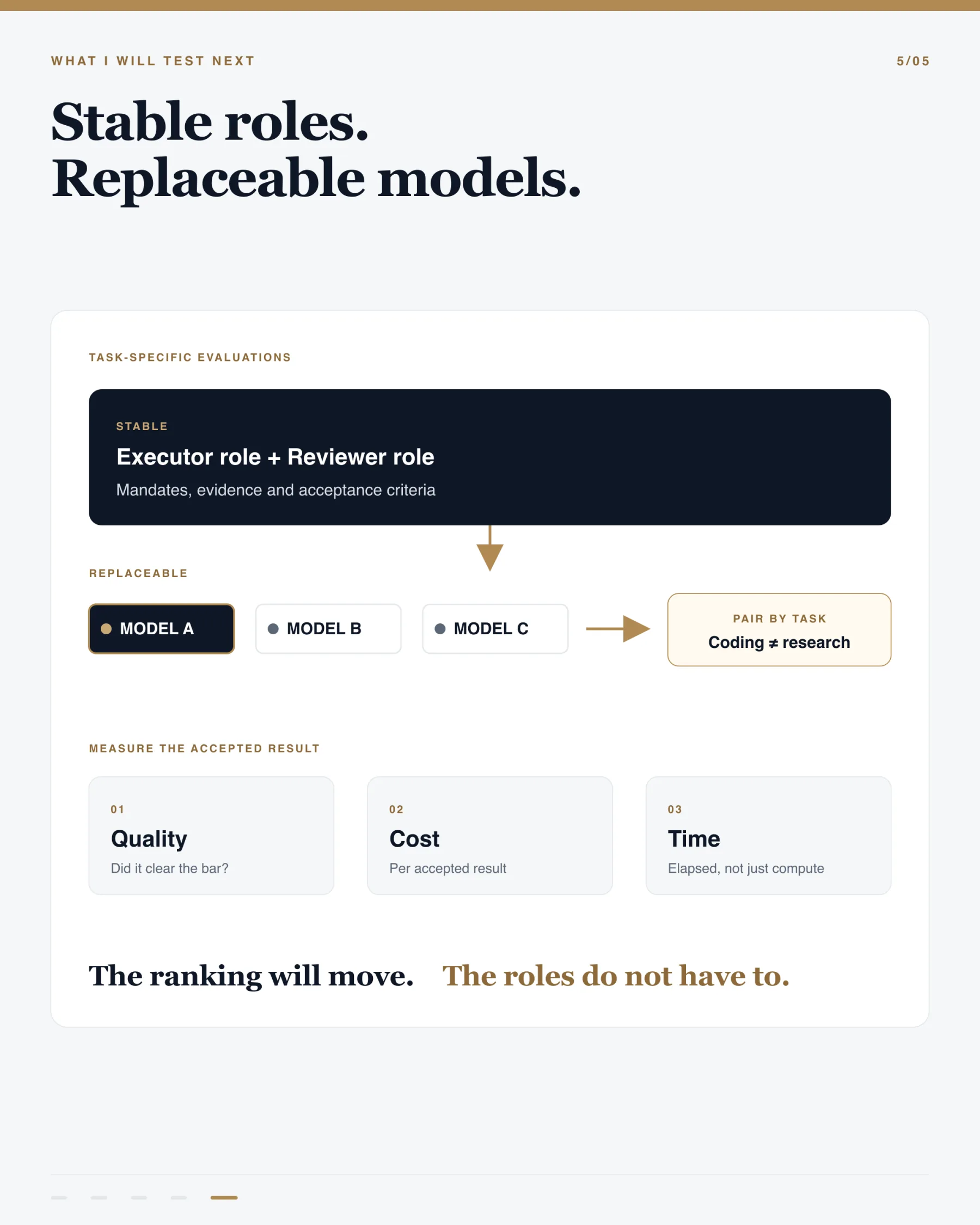
My next step is to test that observation with data. I need evaluations built from the work I actually do. Coding and research may need different model pairings and evidence.
I expect model rankings to move as versions change. I want the role to stay stable while I test and replace the model behind it.
How are you deciding which model gets which role?
#AgenticAI #LLMEvaluation #ModelSelection #LearningAIByUsingAI