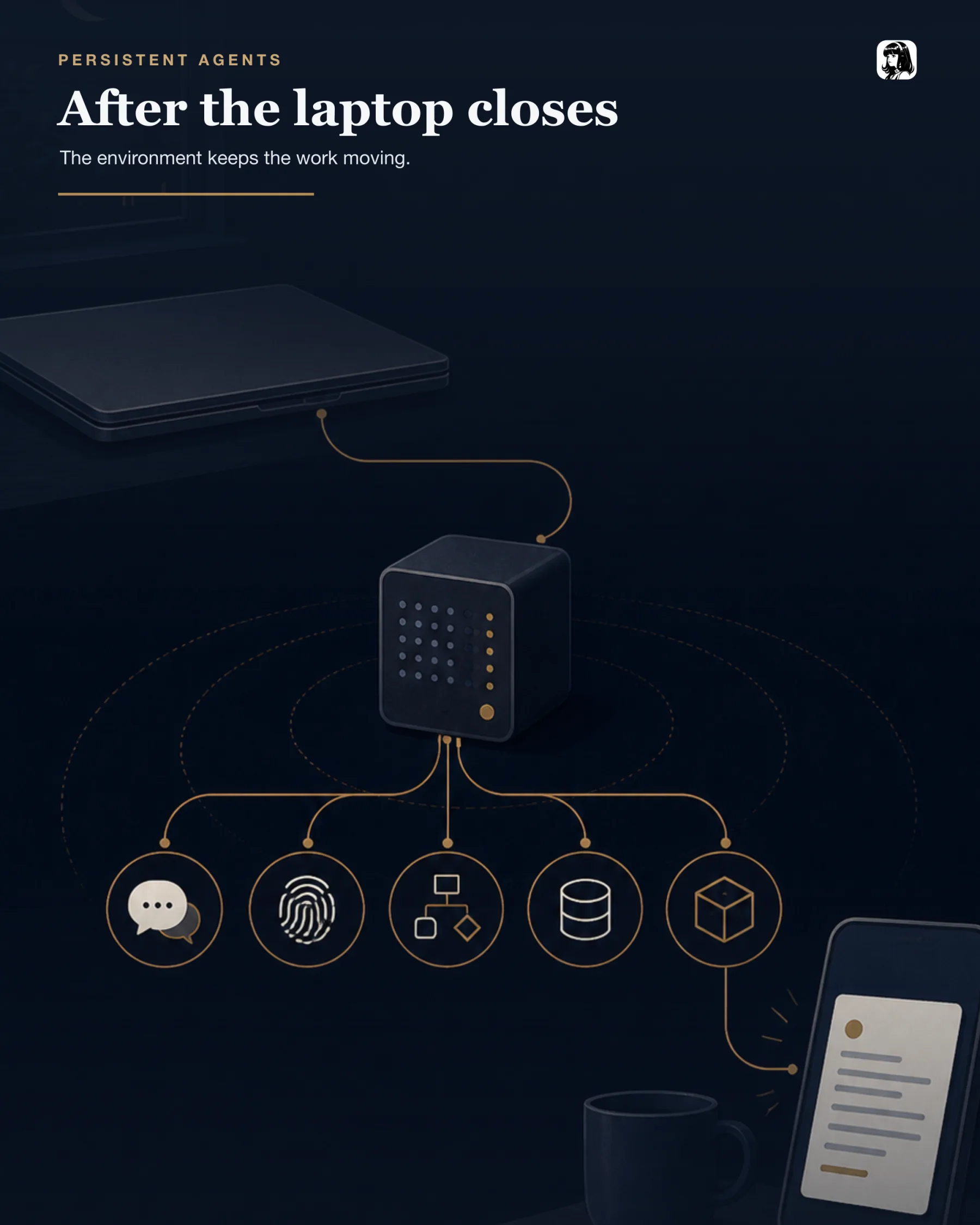
I wanted an AI agent that would still be there when I closed my laptop.
One that could keep a research line alive and tell me what had changed since yesterday, or last week. I was also looking for something my family could use, not an agent tied to one person and one chat.
That was why I started testing Hermes in my personal project. It could run scheduled jobs and meet me in Telegram without tying the rest of the setup to one model.
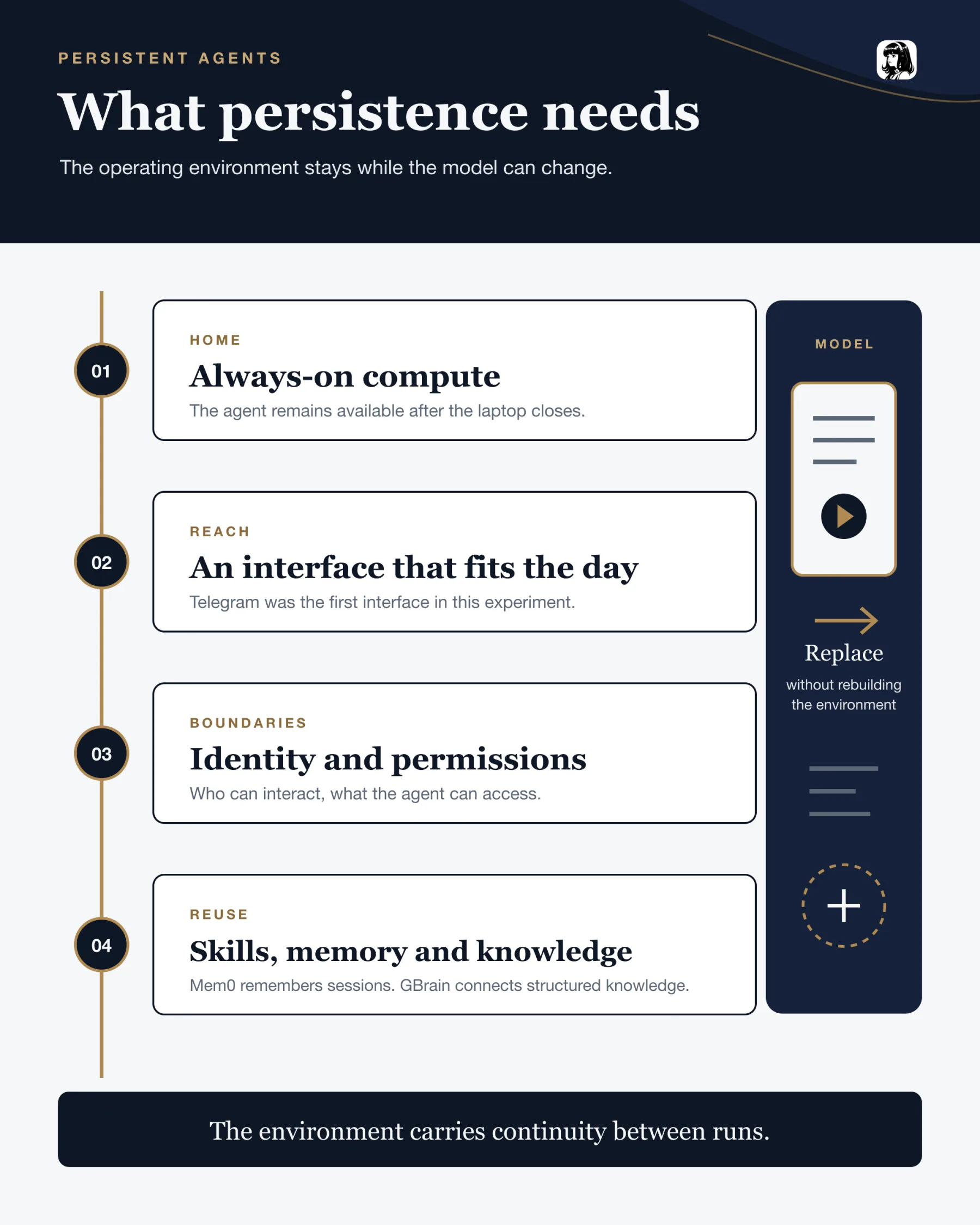
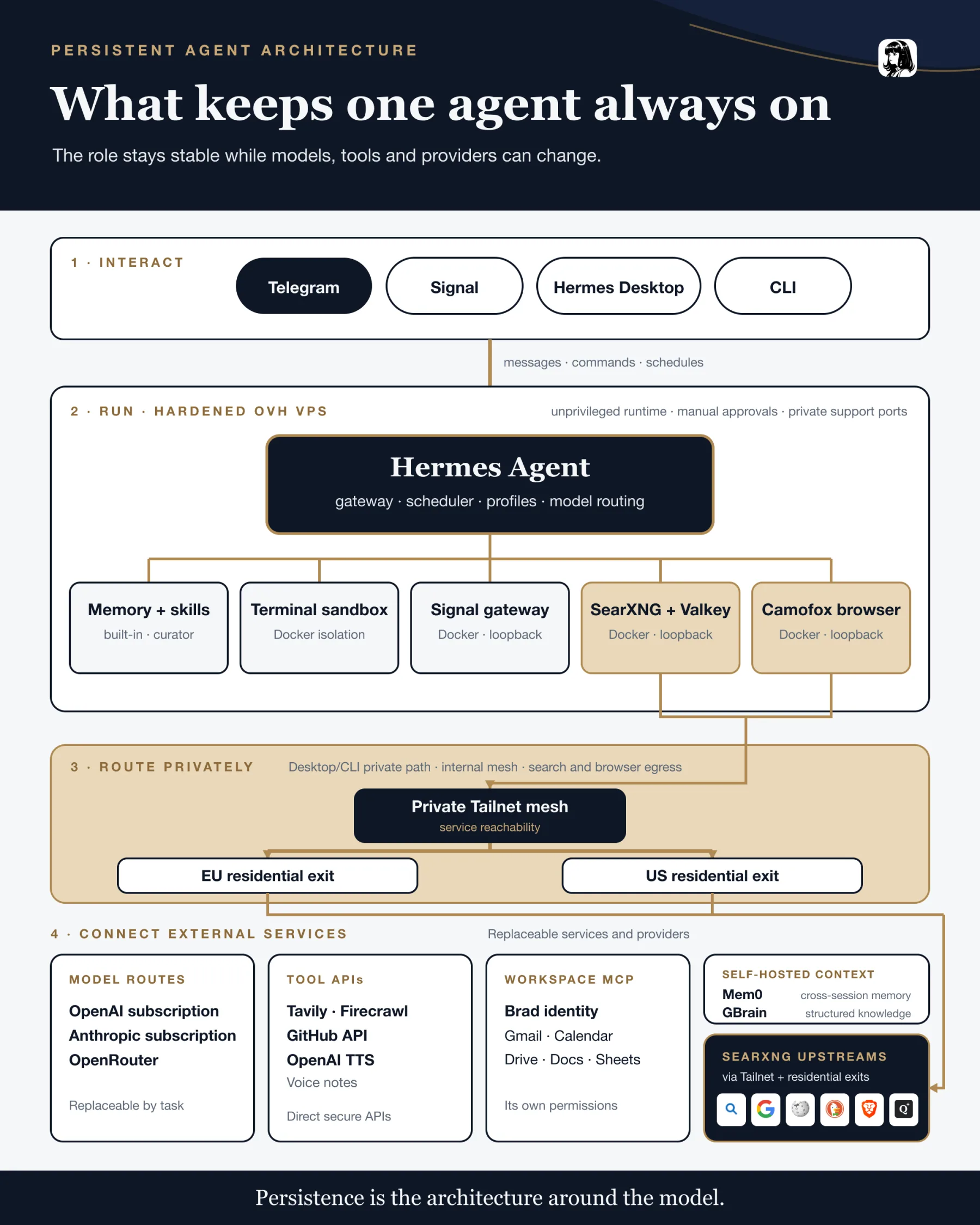
The first learning was simple: persistence needs an always-on home. I put Hermes on a small VPS at OVH, and AI helped me install it, harden it properly and deploy secure connectivity via tailscale. A few years ago, I would have struggled to do that safely on my own.
But keeping a process alive only gives me availability. The continuity I wanted came from the environment around it. Hermes can keep the same identity, permissions, schedules, skills, memory and context while I change the interface or the model doing the work.
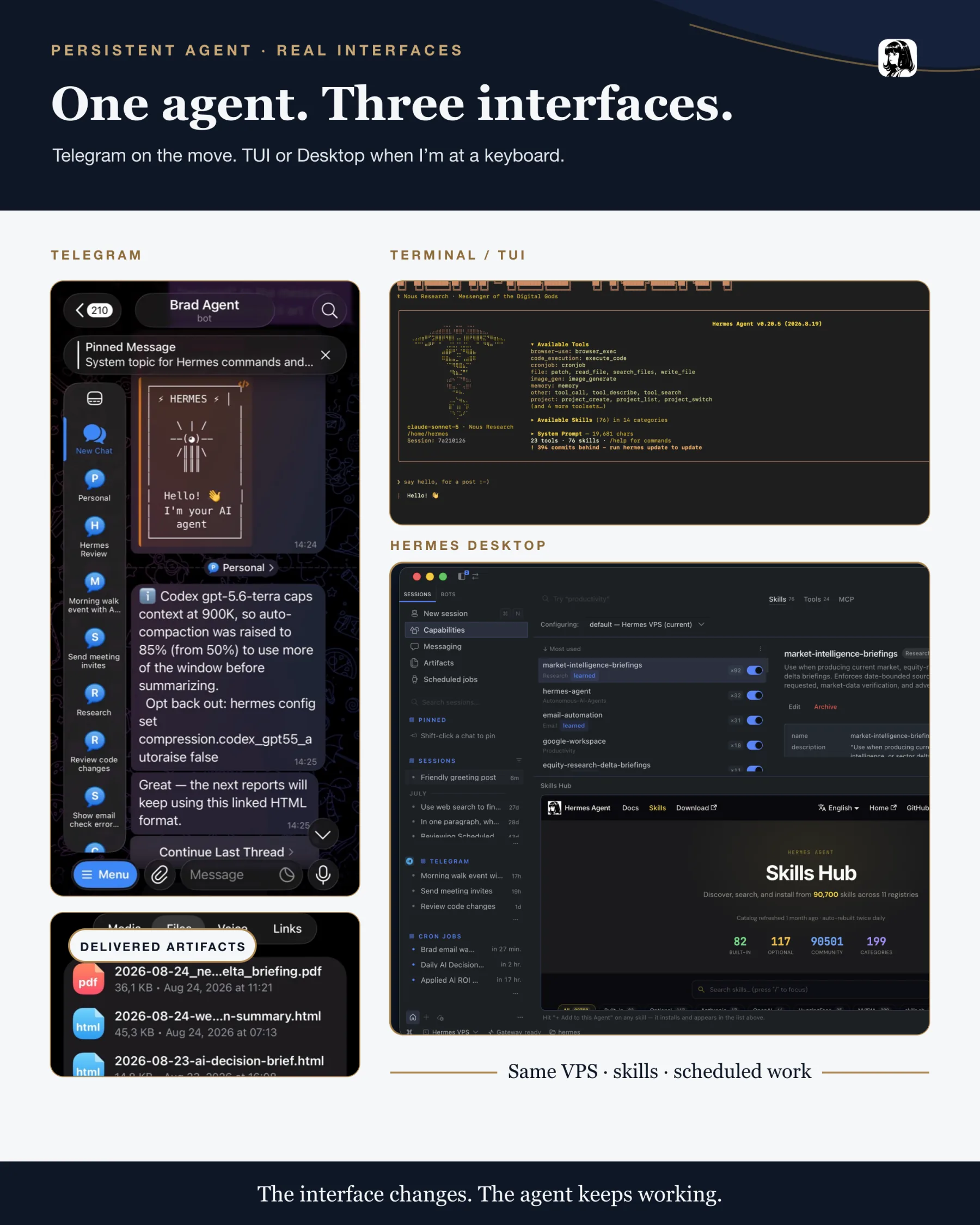
Telegram became the interface that fits most naturally into my day. I can send a request or receive a scheduled result without opening my laptop. This weekend I also connected OpenAI TTS/STT so the agent can reply/receive voice notes. The same agent is available through its terminal and desktop clients when those interfaces make more sense.
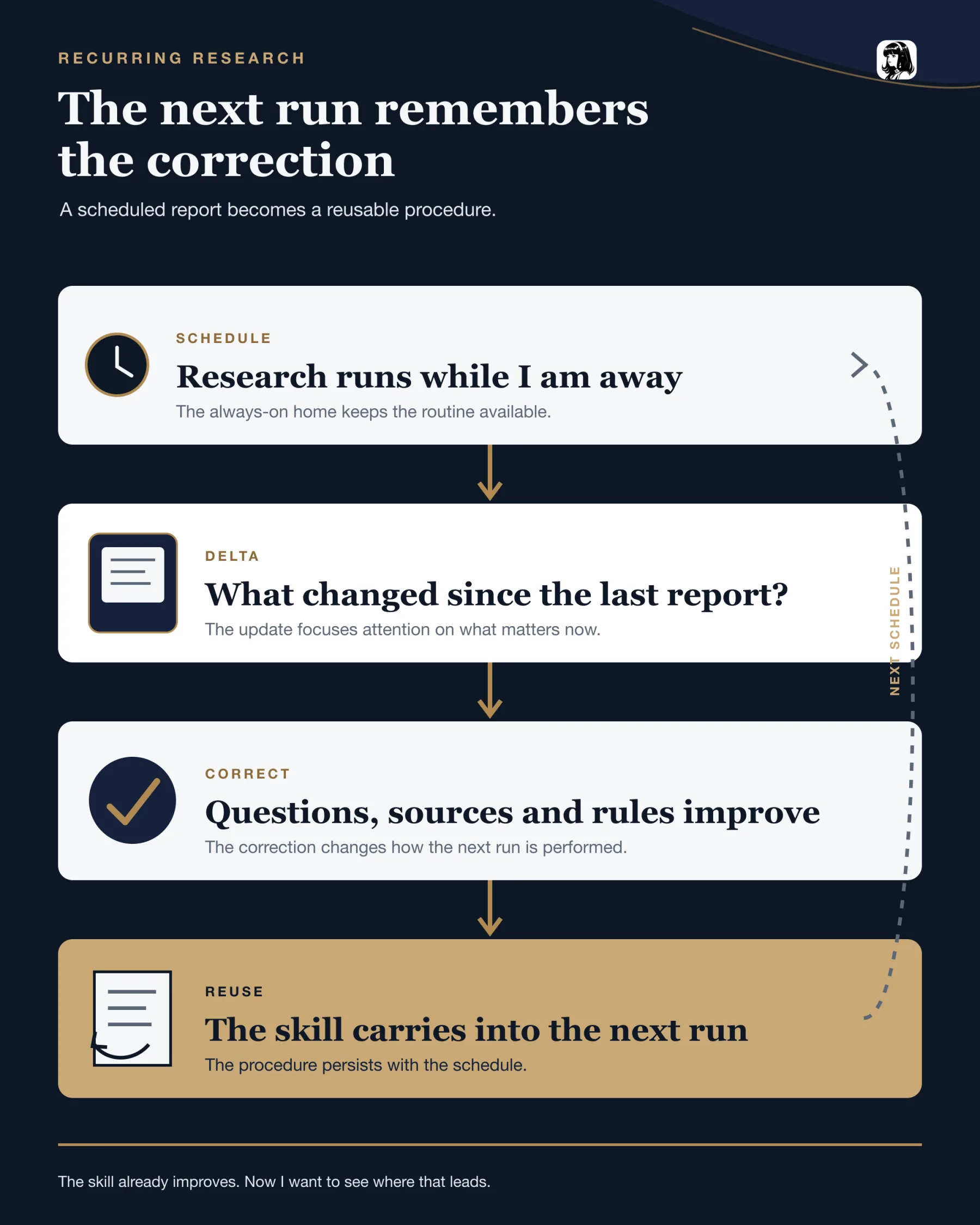
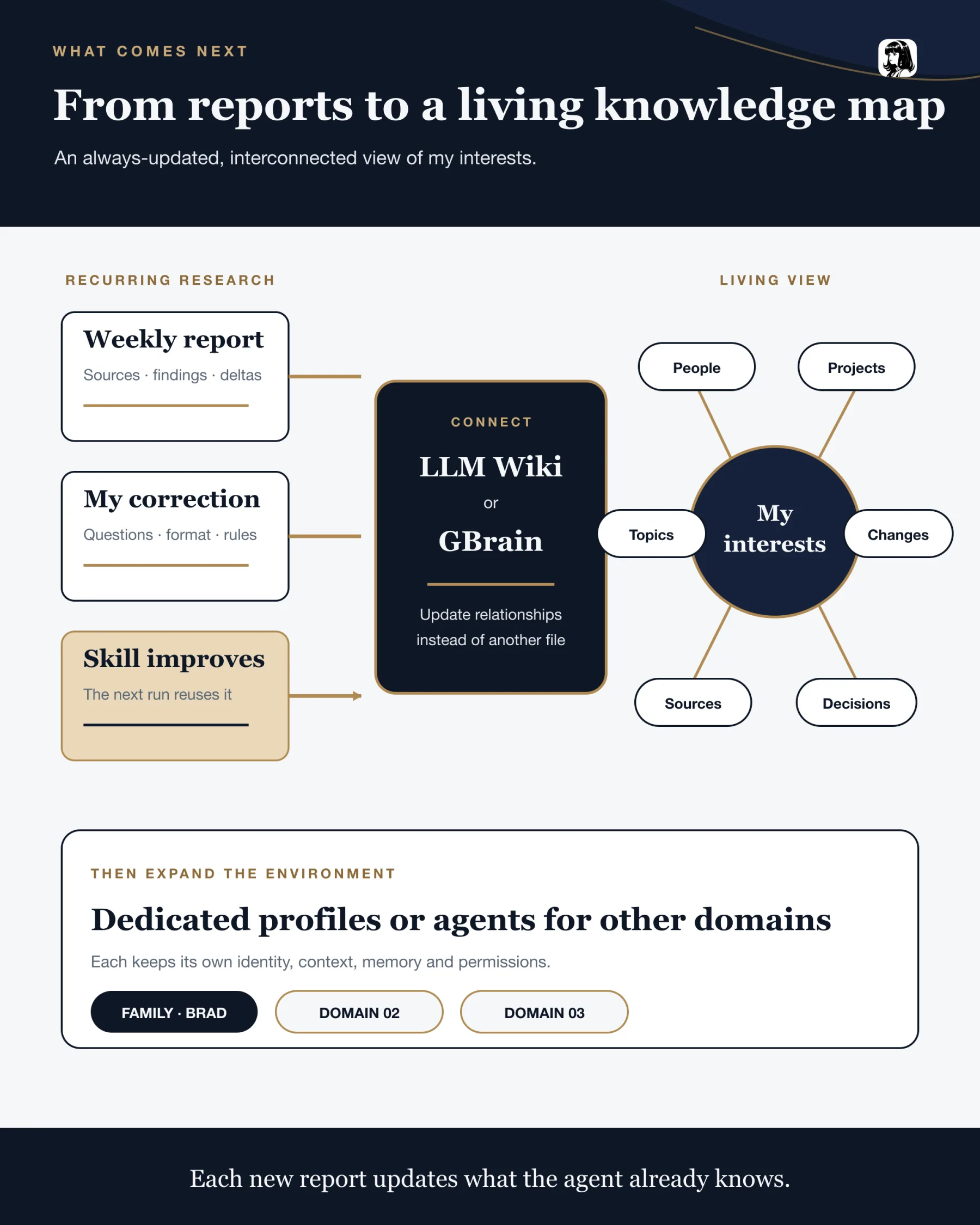
Recurring research was the first use case where that continuity became useful. A weekly report is better when it tells me what changed since the previous one and what deserves attention now. When I correct the report or improve a research skill, the next scheduled run can reuse that procedure.
Memory added two different layers. Mem0 handles cross-session agent memory. GBrain gives the agent structured knowledge about people, projects, meetings and decisions. They solve different problems.
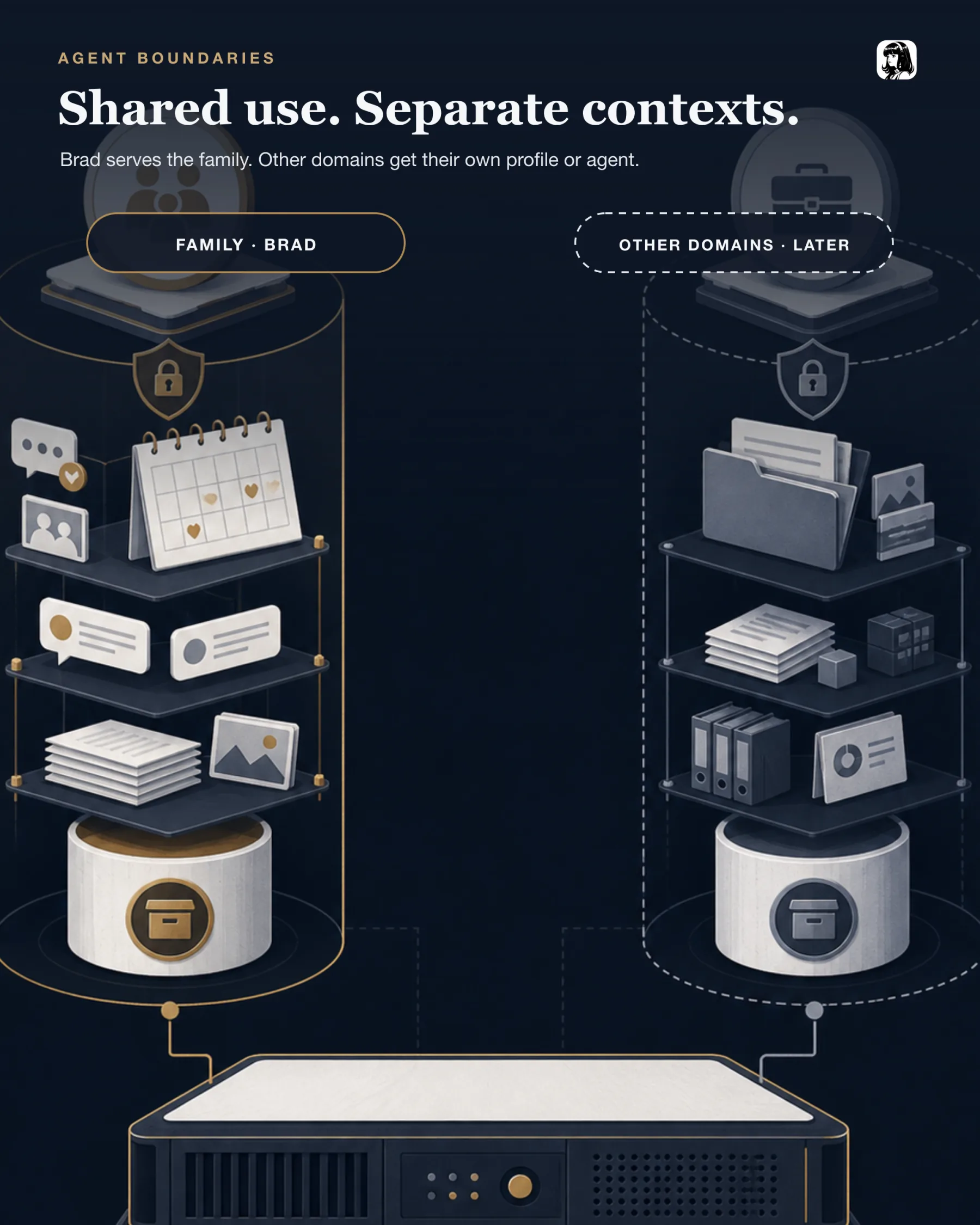
The agent also has its own Google Workspace identity, Brad, with selected access and a limited group of people who can interact with it. Brad is for my personal and family world.
My next step is to keep expanding Hermes' toolset and follow where its automatic skill improvements lead. The research skill already gets better as I correct it, now I want to see what happens as that continues compounding.
I want those recurring reports to build an always-updated, interconnected view of my interests, using an LLM Wiki pattern or GBrain. I also plan to bring dedicated profiles or agents to life for other domains, each with its own identity, context, memory and permissions.
#HermesAgent #AgenticAI #LearningAIByUsingAI